
You're Happy Or It's Free, Guaranteed
Get A Free Quote




Holmes Lawn & Pest builds a pperimeter around your house, from the eaves and window wells down to the thresholds and foundation, so spiders, ants, wasps, and boxelder bugs are turned away in the yard instead of discovered in the kitchen.
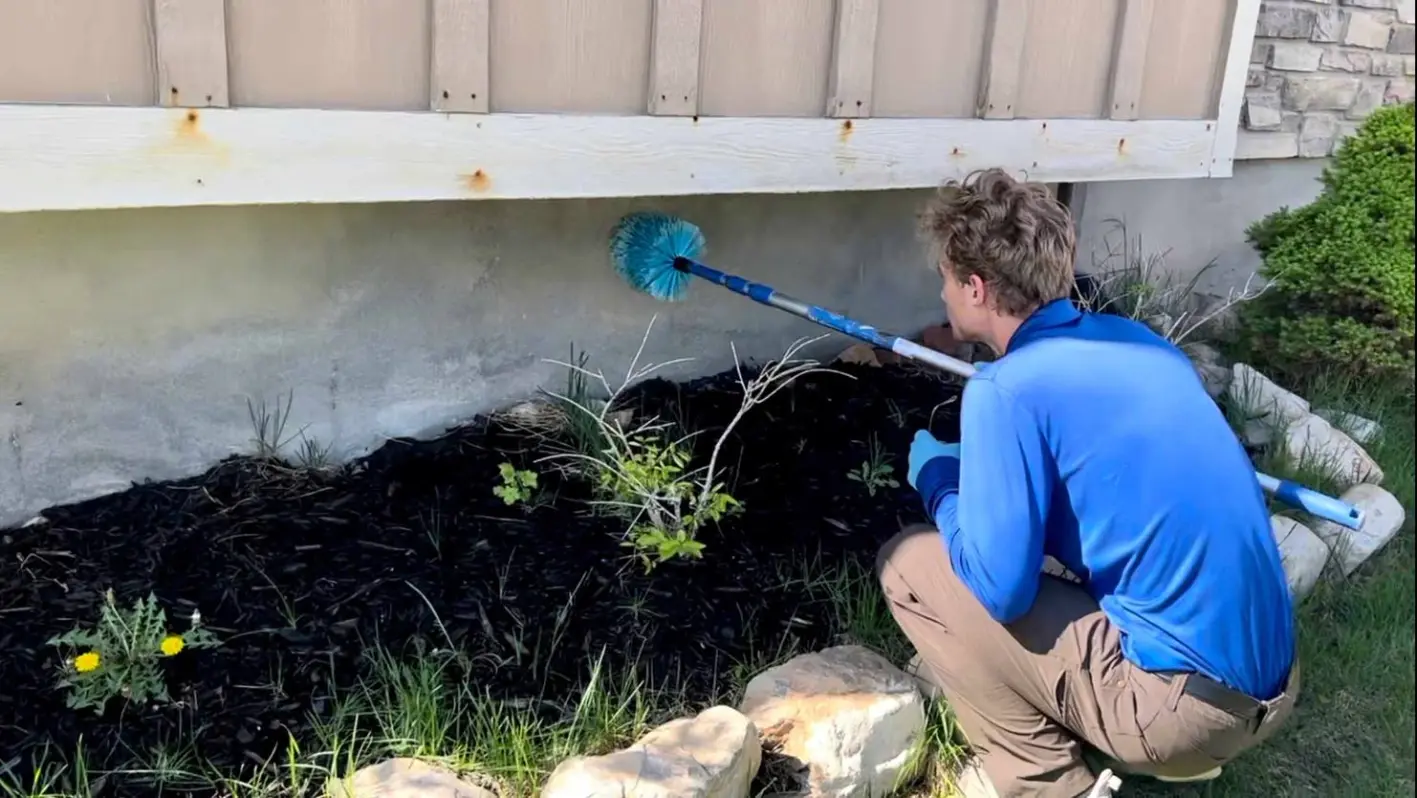
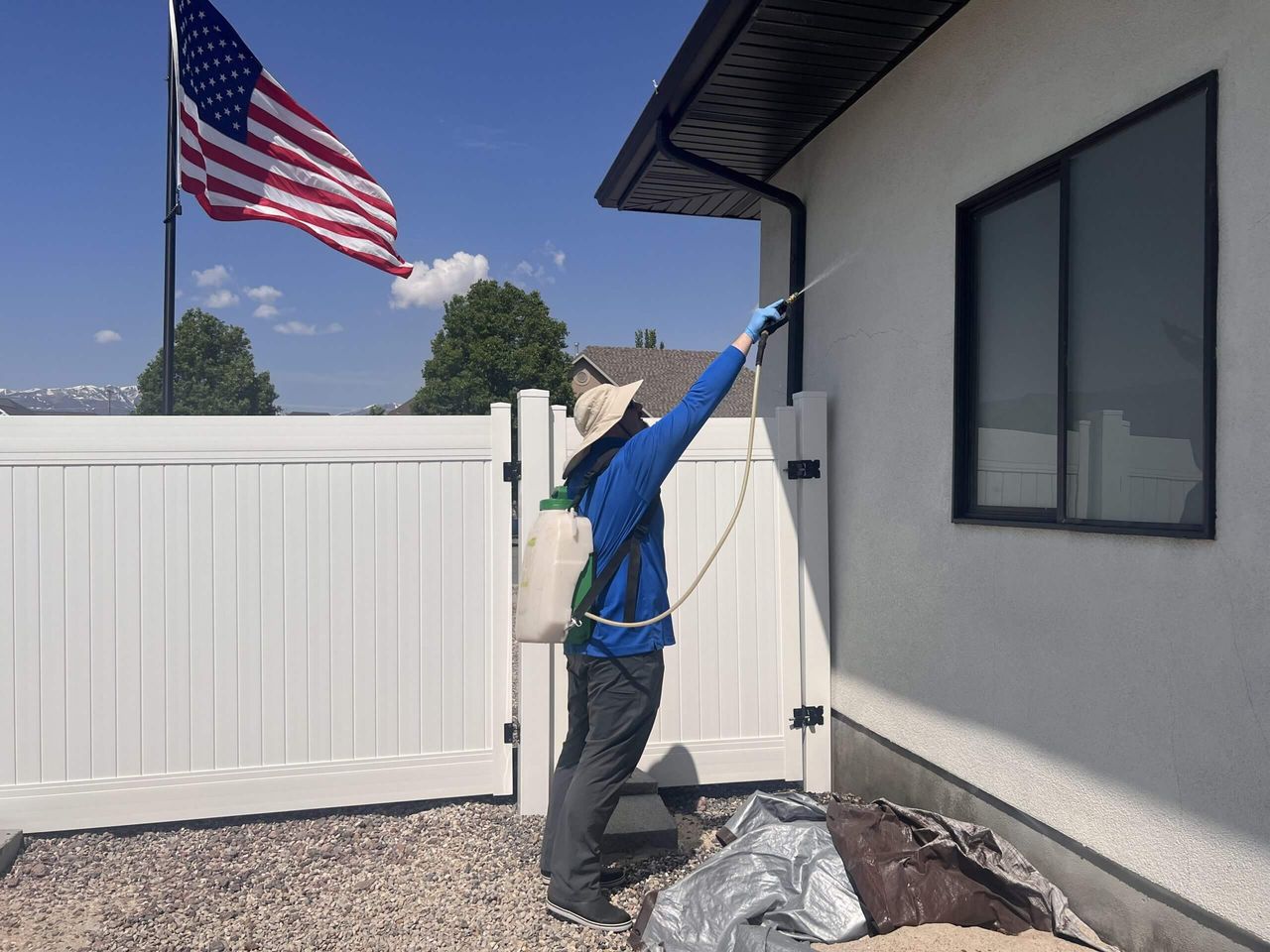

Spraying a living room only deals with the bugs that already got in. Our licensed technicians work the six places outdoor insects use to reach your door, so the problem gets solved before it ever crosses the threshold.
Deep overhangs on Sandy's east-bench ramblers are prime spots for paper wasp combs and black widow retreats. We brush them clear and treat the eave line.
Trim gaps, dryer vents, and hose-bib penetrations get a crack-and-crevice application so crawling insects can't follow pipes indoors.
Plenty of Sandy homes have finished basements, and every well collects spiders. Each one is cleaned of webs and treated.
Worn weatherstripping, garage door corners, and patio slider tracks are where ants and earwigs walk straight in.
A treated strip where the slab or block wall meets the soil, stopping trailing insects before they find a crack.
Shrub beds, rock mulch, and fence lines against the house stay damp under sprinkler spray, which is exactly where colonies get started.
Treatments repeat on a schedule from spring through fall, and the routine is the same at every stop. Here's what to expect when the Holmes truck pulls up:
A full lap of the house to spot fresh webs, new nests, ant mounds, and anything that's changed since last time.
An extension brush pulls down webs, egg sacs, and paper wasp nests from eaves, porch lights, and wells.
Thresholds, weep holes, vents, and utility penetrations get a targeted application.
The foundation band and the beds beside it are re-treated so coverage never lapses.
You get a note on what we found and treated, and the gate is latched just the way you left it.
These five groups account for most of the calls we get from Sandy. Each one finds its way in differently, so the treatment shifts to match.

Black widows tuck into window wells, block walls, and garage corners, while hobo and wolf spiders roam rock beds after dark. Most are harmless, but a widow bite is worth a call to your doctor.
How we handle it: Webs and egg sacs come down from eaves and wells, then hiding spots are treated.

Bald-faced hornets build gray, football-sized paper nests in trees and under rooflines and defend them hard. Keep kids and pets back, and leave removal to a pro.
How we handle it: The nest is treated and removed safely, then nearby trees and eaves are checked for new starts.

Paper wasps hang combs under eaves and deck rails. Western yellowjackets nest underground and get bold around patios and trash cans by late summer.
How we handle it: Nests are knocked down, and the spot is treated so queens don't rebuild there.

Pavement ants push sand up through driveway cracks, odorous house ants trail along the foundation, and western harvester ants build gravel mounds in sunny, open yards. Earwigs hide in the cool, wet soil under rock mulch and ground cover, then squeeze under doors at night.
How we handle it: We treat slab edges, rock borders, and thresholds, where trails begin and earwigs take shelter.

Mature boxelder and elm trees feed these sap-suckers all summer. In fall they pile onto warm south and west walls hunting for gaps to winter in, and they stain siding and curtains.
How we handle it: Sun-facing walls, window frames, and soffits are treated ahead of the fall swarm.
As spring runoff comes off the Wasatch and soil warms up, ants and overwintered wasp queens start moving. Getting the first barrier down now means protection is already in place before numbers climb.
Long, dry days plus daily sprinkler cycles make this the busiest stretch of the year around Sandy patios, decks, and play sets.
Canyon air cools Sandy evenings fast once September arrives, and outdoor pests start hunting for warm cracks. This is when an unbroken perimeter pays off most.
With snow on the ground, most outdoor insects ride out the cold under siding, inside wall voids, and beneath yard debris until spring.
Curious why fall brings bugs to the door? Read about what pulls insects indoors as temperatures drop.
From the mouth of Little Cottonwood Canyon to the river bottoms along the Jordan, what borders your yard decides which pests show up first.
Homes near Bell Canyon, Granite, and the upper east bench back onto scrub oak and native brush, which send a steady supply of spiders and wasps toward the house.
Streets along the Dimple Dell corridor and Dry Creek trails see more ants, earwigs, and spiders wandering in from undeveloped ground.
Decades-old boxelders, elms, and shrubs in Sandy's older subdivisions shelter overwintering bugs and give spiders anchor points right next to the siding.
A 4.9-star rating across more than 600 Google reviews, a Best of SLC 2026 Gold award, and membership in the South Valley Chamber, the same business community Sandy belongs to. More than 2,000 Salt Lake County properties trust us with their yards.
Every technician carries a Utah pesticide applicator license, which covers pest identification and treatment planning, and completes continuing training each year to keep methods current.
David consistently does a great job with our lawn care and pest control. He remembers the little things, like the way we close our gate, and clearly goes above and beyond to ensure we are satisfied with his service. Great technician, great company.
Nate has done a great job with our yard and pest control the past two years. Thanks Nate!
Their pest control is great. And it's organic!
Got rid of the bugs like they weren't even there! And my lawn looks amazing!
"You're happy or it's free guaranteed. Simply put, we know we are the best at lawn and pest. If you aren't happy, we will fix it for free. If you're still not happy, we will refund your last service, guaranteed."Travis Holmes
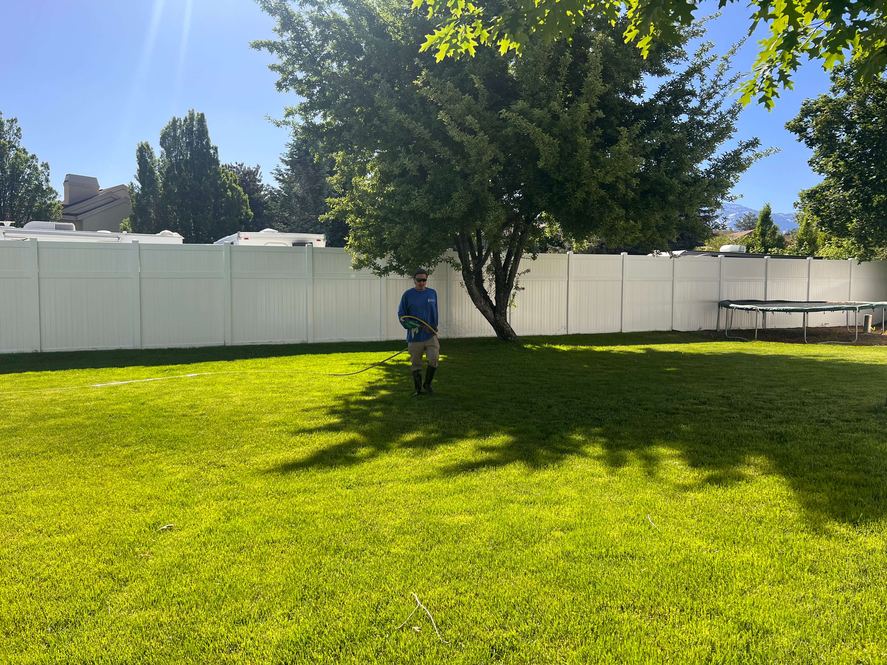
Dense, well-fed turf leaves fewer bare, sun-baked patches for ants to mound in, and it holds up better through a hot south-valley summer.
Add our Sandy lawn fertilization and weed control program, and both services run from one company, on one schedule, and under one guarantee.
See Sandy Lawn FertilizationNo. Holmes treats only the exterior of your Sandy home, building a barrier at the foundation, eaves, and entry points so insects are stopped before they find a way inside.
No. Leave side gates unlocked and pets indoors on service day. We latch everything behind us and leave a note on what was treated.
Visits recur from spring through fall, timed around the way Sandy pest activity rises and falls through the year. You'll hear from us before each one.
Give treated areas about an hour to dry. If a heavy storm follows a visit and bugs show up, call us, and we'll re-treat at no charge under our guarantee.
Keep children and pets off treated areas until they're dry, about an hour. After that, the yard is ready for normal use. Our licensed technicians apply every product according to its label.
Spiders, ants, wasps, hornets, and yellowjackets are the main targets, and the barrier also cuts down on boxelder bugs, earwigs, and other crawling insects. Cockroaches and bed bugs aren't included.
Give us a call. Our happy-or-it's-free guarantee means we come back and re-treat at no cost to you.
The pest barrier isn't sprayed on turf. Lawn-damaging insects, such as sod webworm, are handled inside our fertilization and weed control program instead.
Yes. Mention rodents when you request your quote, and we'll include them in your plan.
Pricing is based on the size of your home and lot. Request a free quote or call (801) 616-5296 for an exact number.
No. You can pause or cancel whenever you like.
Nearby pest control: Draper · Cottonwood Heights · South Jordan · Murray
Free quotes, no contract, and a guarantee that puts the risk on us. Call today or request a quote online for exterior pest control in Sandy, Utah.
How Snow & Ice Removal Affects Your Lawn
Winter cleanup can take a toll on your grass if you're not careful. This post explores how to properly clear snow and ice without harming your grass.
Learn MoreWhy You See More Bugs In Your Home In Fall
As outdoor conditions become less favorable, insects and pests start seeking shelter. Learn what draws them inside during fall and how to keep them out.
Learn MoreHow To Tell The Difference Between Lawn Disease & Drought Damage
Damage from lawn diseases looks similar to drought damage on your grass, but knowing how to spot the differences allows you to treat the problem correctly.
Learn More
Looking for a reliable lawn care company or someone who provides a quality pest control program? Look no further because here at Holmes, we are your lawn and pest experts. You’re happy or it’s free guaranteed.